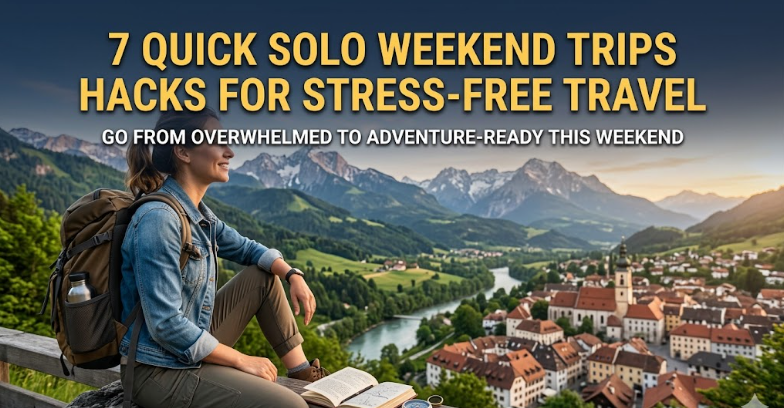
7 quick solo weekend trips hacks for stress-free travel
There’s a very particular kind of freedom that comes with a solo weekend trip. No negotiations over where to eat. No compromises on waking up early or sleeping in. No awkward silences or forced conversations. Just you, a small bag, a plan (or sometimes no plan at all), and the quiet thrill of stepping away from your routine.
But let’s be honest—solo travel isn’t always as effortless as those dreamy Instagram reels make it seem. The packing, the planning, the fear of missing something important, or worse, overthinking every small detail… it can quietly turn what should be a relaxing escape into a mini project.
That’s where smart hacks come in—not the overcomplicated ones, but the practical, tested, “why didn’t I think of this earlier” kind.
This guide dives into seven quick hacks that don’t just save time or money—they protect your peace of mind. Because the real goal of a weekend trip isn’t to optimize everything. It’s to feel lighter, freer, and just a little more alive.
hack 1: pack like you’re leaving in five minutes
Most people pack like they’re moving apartments. That’s the first mistake.
A weekend trip doesn’t need options—it needs clarity.
Here’s a simple mental trick: imagine you just got a last-minute invitation and you have five minutes to pack. What would you grab without overthinking?
That’s your real packing list.
Try this:
- One outfit for travel
- One outfit for your main activity
- One backup outfit
- Lightweight sleepwear
- Minimal toiletries (travel-size only)
Instead of “just in case” thinking, shift to “what’s likely” thinking.
A solo trip is not a fashion show. It’s an experience.
Another underrated tip: roll your clothes instead of folding. It saves space and reduces wrinkles. But more importantly, it lets you see everything at a glance. No digging, no chaos.
A small bag isn’t a limitation—it’s a filter. It forces you to focus on what matters.
And here’s the unexpected benefit: when your bag is light, your mind feels lighter too. You move differently. You worry less. You explore more.
hack 2: choose one anchor activity, not a full itinerary
Overplanning is the fastest way to kill the joy of a short trip.
Instead of building a packed schedule, choose one anchor activity—the thing that made you want to go in the first place.
It could be:
- Watching the sunrise at a quiet beach
- Visiting a specific café you’ve been thinking about
- Hiking a short trail
- Exploring a local market
That’s it. That’s your “must-do.”
Everything else becomes optional.
This approach does two important things:
- It removes pressure
- It creates space for spontaneity
When you’re alone, your energy matters more than your checklist. You don’t need to prove anything to anyone. You don’t need to “maximize” your trip.
You just need one meaningful moment.
And often, the best memories come from the unplanned parts—the random street you wandered into, the unexpected conversation, the quiet hour doing absolutely nothing.
hack 3: book your first night only
Here’s a small shift that makes a big difference: don’t lock your entire trip in advance.
Book your first night (or your only night, if it’s just one), and leave the rest flexible.
Why?
Because your mood changes. Your energy changes. Sometimes the place you thought you’d love doesn’t feel right once you’re there.
Having flexibility gives you control.
If you fall in love with a place, you can stay longer. If you don’t, you can move on without feeling stuck.
Even on a short weekend trip, this mindset matters. It reduces that subtle anxiety of “what if I made the wrong choice?”
Also, when you’re traveling solo, your tolerance for discomfort is different. You notice things more. You feel things more.
So give yourself room to adjust.
And if flexibility feels risky, keep a backup list of nearby places. Not bookings—just options.
That way, you’re not rigid, but you’re not unprepared either.
hack 4: use the “offline safety net”
Stress often comes from uncertainty. What if your phone dies? What if there’s no signal? What if you can’t find your way back?
The solution isn’t to carry more gadgets. It’s to create a simple offline safety net.
Before you leave:
- Screenshot your booking details
- Save maps offline
- Write down one emergency contact (yes, on paper)
- Keep a small amount of cash separate from your wallet
This isn’t about expecting things to go wrong. It’s about knowing you’ll be okay if they do.
That quiet confidence changes how you travel.
You stop checking your phone every five minutes. You stop worrying about “what if.”
You become more present.
And presence is the real luxury of solo travel.
hack 5: eat where it feels right, not where it looks perfect
Food decisions can surprisingly become stressful when you’re alone.
You stand outside a place, scrolling reviews, comparing ratings, wondering if you’re making the “best” choice.
Here’s a simpler approach: eat where it feels right.
Trust your instincts.
Does the place look welcoming? Are there people inside? Does the smell pull you in?
That’s enough.
Not every meal needs to be exceptional. Some just need to be comfortable.
Also, solo dining is a skill. At first, it can feel awkward. But once you get used to it, it becomes one of the most peaceful parts of traveling.
Bring a book. Sit by a window. Watch the world move.
You’re not “alone” in a negative sense—you’re independent.
And that shift in perspective changes everything.
hack 6: set a loose “return-to-base” time
When you’re exploring solo, time can slip away quickly. One street turns into another, one stop into five.
That’s part of the fun—but it can also lead to exhaustion.
A simple hack: set a loose return-to-base time.
Not a strict deadline. Just a gentle boundary.
For example: “I’ll head back around sunset” or “I’ll be back by 8-ish.”
This does two things:
- It prevents burnout
- It gives your day a natural rhythm
You explore freely, but you also know when to slow down.
And having that quiet evening time—back at your room, reflecting, resting, maybe journaling—is often the most underrated part of a solo trip.
It’s where everything settles.
hack 7: leave space for doing nothing
This might sound counterintuitive, but it’s one of the most important hacks.
Don’t fill every hour.
Leave intentional gaps.
Sit somewhere without a plan. Walk without a destination. Pause without checking your phone.
Doing nothing isn’t wasted time—it’s recovery.
Your mind needs it. Your body needs it.
And when you’re alone, those quiet moments become surprisingly rich. You notice details. You think more clearly. You reconnect with yourself in small, subtle ways.
A weekend trip isn’t just about where you go. It’s about how you feel while you’re there.
And sometimes, the best way to feel better is to stop trying so hard.
bringing it all together
Stress-free travel isn’t about perfection. It’s about reducing friction.
Every small decision you simplify—packing lighter, planning less, trusting yourself more—adds up.
You don’t need to become an expert traveler overnight. You just need a few reliable habits.
Think of these hacks as quiet adjustments, not rigid rules.
You’ll still forget things sometimes. You’ll still make small mistakes. That’s part of the experience.
But with the right mindset, those moments don’t ruin your trip—they become part of the story.
And that’s really what solo travel is: a collection of small, personal stories that no one else experiences the same way.
You don’t need everything to go perfectly.
You just need to go.
faqs
- is solo weekend travel safe?
Yes, in most cases it is safe if you take basic precautions. Choose well-reviewed accommodations, avoid isolated areas late at night, keep someone informed about your plans, and trust your instincts. Solo travel safety is more about awareness than fear.
- how do i avoid feeling lonely during a solo trip?
Loneliness can happen, but it’s usually temporary. Engage with your surroundings—visit busy places, try local cafés, or join short group activities. Also, remember that solitude and loneliness are different. Solo travel often helps you become comfortable with your own company.
- what is the best way to manage a tight budget for a weekend trip?
Keep it simple: travel light, avoid unnecessary bookings, eat at local spots instead of expensive restaurants, and focus on free or low-cost activities like walking tours or nature spots. Planning one key activity instead of many also helps control spending.
- should i plan everything before leaving?
No. Overplanning can add stress. It’s better to have a basic structure—transport, first night stay, and one main activity—while leaving room for flexibility. This balance helps you stay relaxed and adaptable.
- how do i pack efficiently for just two or three days?
Stick to essentials and versatile clothing. Choose items that can be mixed and matched. Limit shoes, carry travel-size toiletries, and avoid packing “just in case” items. A small backpack is usually enough.
- what if something goes wrong during the trip?
Small things might go wrong—it’s normal. Having an offline backup (saved documents, emergency contact, extra cash) helps you stay calm and handle situations easily. Most issues are manageable, and solving them often boosts your confidence as a solo traveler.
—
A solo weekend trip doesn’t need to be complicated to be meaningful. With a few thoughtful hacks and a relaxed mindset, it can become one of the most refreshing experiences you give yourself—again and again.