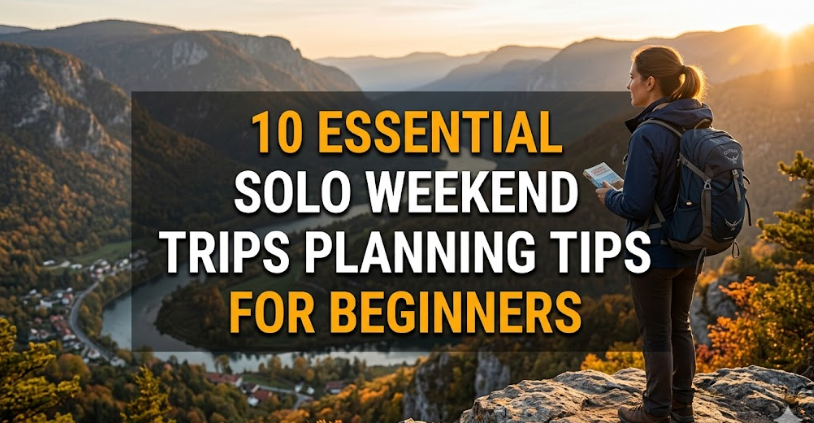
10 Tips for Planning the Best Solo Weekend Trips for Beginners
Planning solo weekend trips can be overwhelming for many beginners — with the right tips, you can travel alone confidently, safely and inexpensively. Start your journey today!
There’s something magical about throwing a bag together and heading into the world by yourself. No group decisions. No waiting on others. It’s just you and the open road with no time to get there.
Solo weekend trips have never been so popular. People are beginning to discover that solo travel isn’t scary — it might be one of the best things you do. You discover more about yourself, you find unlikely friends, and you develop real confidence.
If you’ve never done it, though, planning your first solo trip can feel overwhelming. Where do you start? How do you stay safe? What if something goes wrong?
Don’t worry. This guide simplifies everything into 10 easy, beginner-friendly tips that can help you confidently plan your first solo weekend getaway. Whether you’re dreaming of a mountain hike, a cozy city break or a quiet beach getaway — these tips will put you on the path to success.
Tip 1: Ease In — Choose an Appropriate First Destination
Your first solo trip doesn’t have to be epic. The best beginner solo trips are, in fact, short and close by and low-pressure.
Consider spots within a 2–5 hour drive or train trip from home. Familiar regions feel less intimidating. You already know the culture, the currency, perhaps even the language. That comfort allows you to focus on enjoying the trip rather than enduring it.
What Makes a Good Solo Destination for Beginners?
- Safe reputation — Check travel safety ratings for your destination
- Good public transport — Not so easy getting around without taxis
- Solo traveler friendly — Areas with hostels, walking tours and café culture do well
- Not too remote — Somewhere that you can get help quickly if needed
A weekend in a nearby city or national park a few hours away, or perhaps a small coastal town, are all great jumping-off points.
Pro tip: Google “best solo travel destinations for beginners” + your country and see the results tailored to where you live.
Tip 2: Decide on a Realistic Budget Before Booking Anything
Money stress can kill any trip. One of the smartest moves you can make is to give yourself a clear budget before you book anything.
For a solo weekend trip, your biggest expenses will be:
| Expense Category | Estimated Cost Range |
|---|---|
| Accommodation (2 nights) | $40 – $150 |
| Transport (round trip) | $20 – $100 |
| Food & drinks | $30 – $80 |
| Activities & entry fees | $10 – $60 |
| Emergency fund | $50 – $100 |
| Total Estimate | $150 – $490 |
These numbers differ widely based on where you’re going. A major city such as New York will be pricier than a small country town.
Basic Budgeting Guidelines for Solo Travelers
- Always include a 15–20% buffer for unexpected things
- Pre-book accommodation and transport — prices increase the closer you get to the date
- Eat where locals eat — it will be cheaper and often better
- Low-cost activities, such as hiking, strolling city neighborhoods or visiting public parks, can save hundreds
Solo travel has an unexpected budget upside: You’re only paying for you. No compromising on budget restaurants. Every dollar goes where you’d like it to go.
Tip 3: Create a Flexible Itinerary — Not a Tight Schedule
The biggest mistake beginners make is over-planning. They schedule every hour of every day and feel like a failure when things change.
The key to solo travel is a flexible itinerary. Know your highlights. Have a few backup options. But leave breathing room.
One Weekend Planning Method: The 3-Anchor System
Select 3 “anchor” activities — one for each half-day or full day. These are your non-negotiables. Everything else is a bonus.
Example Weekend Itinerary (Mountain Town):
Saturday:
- Morning Anchor: Hike to a sunrise viewpoint
- Afternoon: Explore the town, visit the local market
- Dinner at a highly rated local restaurant
Sunday:
- Morning Anchor: Explore a local waterfall or natural destination
- Afternoon: Relax, explore, head home
This method gives you structure without the stress. If you slept in, skipped the market or spent three hours in a coffee shop — it’s OK. You still hit your anchors.
Tip 4: Pick Accommodation That Suits Your Comfort Level
Where you sleep on a solo trip is hugely important — particularly on your first.
Solo travel does not mean you have to sleep in a hostel dorm to be a “real” solo traveler. Choose what keeps you safe and comfortable. That said, there are genuine advantages to different options depending on what you want to accomplish.
Solo Accommodation Options Compared
| Type | Best For | Avg. Cost/Night | Social Factor |
|---|---|---|---|
| Hostel Dorm | Budget travelers, meeting people | $15 – $40 | Very High |
| Hostel Private Room | Budget + privacy | $30 – $70 | Medium |
| Budget Hotel / Motel | Comfort-focused beginners | $50 – $120 | Low |
| Airbnb (private room) | Local experience | $40 – $100 | Medium |
| Camping | Outdoorsy/budget travelers | $10 – $35 | Varies |
If you’re anxious about traveling alone, a hostel with a common area is actually a solid option. You have your own space but you’re never truly alone — there’s always someone to chat or eat with.
What to Look for When Booking
- Solo female traveler reviews (if relevant)
- 24-hour front desk or check-in
- Secure lockers or in-room safes
- Central or well-connected location
Tip 5: Pack Light — No, Really; Bring Less Than You Think
There’s an adage about solo travel: If in doubt, leave it out.
When you’re alone, you carry your own bags. Every extra kilogram costs you in speed, energy and makes you a more appealing target in crowded environments.
The Beginner Solo Packer’s Checklist
Clothing (for a 2-night trip):
- 2 outfits (mix and match)
- 1 extra pair of socks and underwear
- Light jacket or layers
- Comfortable walking shoes
Essentials:
- Phone + charger + power bank
- Travel adapter (if needed)
- ID, passport and copies kept separately
- Cash + one card
- Basic first aid kit (band-aids, pain relief, any prescription meds)
Avoid Packing:
- More than one pair of shoes
- “Just in case” outfits you’ll never wear
- Items you’d be heartbroken to lose
You can pack a weekend into a carry-on bag or medium-sized backpack. Bonus: no baggage fees, and you never wait at a carousel.
Tip 6: Research Safety, but Don’t Let Fear Call the Shots
Safety is a top concern for first-time solo travelers. But the truth is, most solo weekend trips are completely uneventful and safe.
That said, smart preparation matters.
Before You Leave Home
- Share your itinerary with at least one trusted person — hotel names, addresses and check-in dates
- Note emergency numbers for your destination (local police, embassy or hospital)
- Take digital copies of your passport, ID and travel insurance — email them or store them in the cloud
- Read any travel advisories on government travel websites for your destination
While You’re Traveling
- Trust your gut — if something feels off, leave
- Stay alert, particularly in busy tourist spots
- Don’t flash expensive gear like cameras, laptops or fancy jewelry
- Leave valuables in a hotel safe or locker while out
Solo travel isn’t inherently dangerous. Millions of people do it every weekend all over the world. The goal isn’t paranoia — it’s preparedness.
Tip 7: Purchase Travel Insurance — Even for a Short Trip
This one’s non-negotiable. Many beginners don’t bother buying travel insurance for short trips because they assume it’s not worth it. That’s a mistake.
Even on a 2-day trip, things can go wrong:
- An injury from hiking that requires medical attention
- A non-refundable train cancellation
- A stolen wallet or phone
- An illness that forces you to cancel
For a weekend getaway, travel insurance usually costs between $5 and $20. It’s a small price for genuine peace of mind.
What Travel Insurance Should Include
- Medical emergencies and hospital visits
- Trip cancellation or interruption
- Lost or stolen belongings
- Emergency evacuation (especially important for outdoor trips)
Check if your credit card already offers travel coverage — some premium cards do. If not, sites like World Nomads, SafetyWing or InsureMyTrip make it easy to find and purchase quick policies.
Tip 8: Embrace Solo Dining and Downtime Without Awkwardness
One of the greatest fears for new solo travelers? Eating alone in a restaurant.
Here’s a secret: No one cares as much as you think they do. People are absorbed in their own meals, conversations and phones. The solo diner at the corner table is simply… a person having dinner.
Ways to Make Solo Dining a Treat
- Sit at the bar or counter — more natural for solo diners and often leads to great chats with staff
- Bring a book or journal — gives you something to do and makes you look purposeful, not lonely
- Try local breakfast spots — mornings are more relaxed, with less of a couples-and-groups energy
- Order with confidence — have your choice ready before the server arrives
Time alone on a trip is also genuinely rewarding. Long walks with headphones in. Journaling at a café. Sitting on a bench and simply watching the world go by. You don’t have to fill every minute.
It’s often in that quiet time where the best memories are made.
Tip 9: Embrace Connections — When You Want Them
Just because you’re solo doesn’t mean you have to be lonely. One of the perks of solo weekend trips is the freedom to connect with people entirely on your own terms.
You might spend 100% of the trip alone — totally valid. Or you might end up having conversations you never expected.
Simple Ways to Meet People on Solo Trips
- Attend a free walking tour — they exist in most cities, are great for solo travelers and naturally connect you with a group
- Stay in a social hostel — look for ones that organize evening events, group dinners or pub crawls
- Join Meetup or Couchsurfing events — there are often traveler meetups in most cities on weekends
- Chat with fellow hikers at a popular viewpoint — fellow adventurers are usually friendly
- Take a class or workshop — cooking classes, surf lessons and art workshops are fun solo and often social
The best friendships made while traveling solo are unexpected. Stay open and approachable.
Tip 10: Reflect, Debrief and Start Planning the Next One
Once you’ve completed your first solo weekend trip, take time to reflect. This is how you grow as a traveler and improve each subsequent trip.
Post-Trip Questions Worth Asking Yourself
- What was the best part of the trip?
- What could I have done differently?
- Did I pack correctly, or did I over/under-pack?
- How did I feel about traveling alone — and how does that compare to what I expected?
- What destination or experience do I want to try next?
Write it down if you can. Travel journaling — even just a few lines each day — helps memories stick and gives you a roadmap for future trips.
Solo travel builds on itself. Your second trip is easier than your first. Your third is easier than your second. Each one builds confidence, skill and a deeper understanding of how you like to travel.
Solo Weekend Trips: A Quick Reference Guide
| Tip | Key Action | Impact |
|---|---|---|
| Choose the right destination | Start close, safe + well-connected | ⭐⭐⭐⭐⭐ |
| Set a budget | Determine all costs + add 20% buffer | ⭐⭐⭐⭐⭐ |
| Create a loose itinerary | Use the 3-anchor planning method | ⭐⭐⭐⭐ |
| Choose the right accommodation | Match comfort level to safety | ⭐⭐⭐⭐⭐ |
| Pack minimal | Carry-on only for weekend trips | ⭐⭐⭐⭐ |
| Research safety | Share trip details + save emergency numbers | ⭐⭐⭐ |
| Get travel insurance | Even $5–$20 is worth it | ⭐⭐⭐⭐⭐ |
| Enjoy solo dining | Sit at the bar + bring a book | ⭐⭐⭐ |
| Meet new travelers | Walking tours and social hostels are great starting points | ⭐⭐⭐⭐ |
| Reflect and plan ahead | Journal your experience + plan the next trip | ⭐⭐⭐⭐ |
Final Thought: Your Solo Adventure Begins With a Small Step
Solo weekend trips are not just for world-renowned globetrotters or adventurous types. They’re for anyone who wants a little freedom, a fresh perspective and the quiet confidence that comes from doing something entirely on your own.
You don’t need to go far. You don’t need a big budget. You don’t need to know everything.
Choose a destination a few hours away. Book one night. Pack light. Make a couple of loose plans and let the rest take its course.
The first time you travel alone is always the hardest — and almost always the most memorable. Because you’ll come home knowing something about yourself you didn’t before: You can do this.
So pick a destination. Open that booking app. And step into your solo adventure.
Frequently Asked Questions (FAQs)
Q1: Is solo travel safe if you’ve never done it before? Solo travel is quite safe in most cases — when you plan smartly. Stick to easy destinations, let someone you trust know your plans, stay aware of your surroundings and get travel insurance. Millions of people travel alone every weekend without incident.
Q2: How much money do I need for a solo weekend trip? A budget-friendly weekend trip with nearby transport, affordable hostel accommodation and local dining can cost as little as $150–$200. More comfortable trips typically run $300–$500. Always add a 15–20% buffer for unexpected costs.
Q3: What is the best accommodation for first-time solo travelers? It depends on your personality. If you want to meet people and save money, try a hostel with a social common area. If you prefer privacy and comfort, a budget hotel or private Airbnb room works well. The key is to choose somewhere safe, central and highly reviewed.
Q4: How do I handle eating alone in restaurants? Sit at the counter or bar, bring a book or journal and order with confidence. It can feel awkward at first, but you’ll quickly realize no one is paying much attention. Most solo travelers find it becomes one of their favorite parts of the experience.
Q5: Do I really need travel insurance for a short weekend trip? Yes — even for short trips. A basic policy for $5–$20 is far less costly than an accident, theft or unexpected cancellation. It’s a small investment that delivers valuable peace of mind, especially when you’re new to traveling solo.
Q6: How do I meet people while traveling solo? Join free walking tours, stay in social hostels, attend local Meetup gatherings or sign up for activity classes such as cooking or surfing. Solo travelers tend to be very open to conversation — you just need to put yourself in the right situations.
Q7: What should I never forget to pack for a solo weekend trip? Always carry: a fully charged phone, your ID and a digital copy stored in your email, one card and some cash, a portable power bank, your accommodation address and local emergency numbers. Avoid displaying valuables in public.
Q8: How do I choose my first solo destination? Choose somewhere a few hours from home with a strong safety record, good public transportation and activities you’re genuinely excited about. There’s no need to aim for the most exotic destination on your first trip — save that for when you’ve built more experience traveling alone.