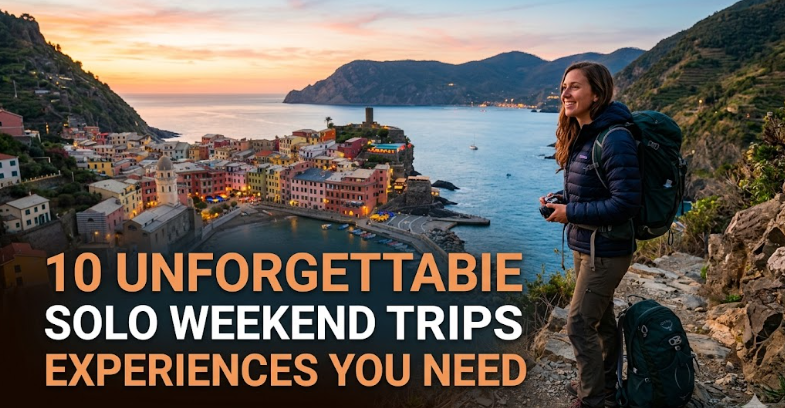
10 Unforgettable Solo Weekend Trips Experiences You Need
There’s a particular kind of silence that only arrives when you travel alone. It’s not the absence of noise, but the absence of expectation. No one is waiting for your reaction, no one is asking what you want to do next, and no one is shaping your choices. At first, that silence can feel unfamiliar—almost uncomfortable—but give it a few hours, or maybe a day, and it transforms into something deeply personal. It becomes space. And in that space, unforgettable experiences begin to unfold.
This isn’t just a list of places or activities. It’s a collection of moments—real, textured, sometimes messy—that happen when you give yourself a weekend and the freedom to explore it alone. Each experience has its own rhythm, its own quiet lessons, and its own way of staying with you long after you return.
- The sunrise you didn’t plan for
It usually starts the night before, when you tell yourself you’ll wake up early, knowing full well you might not. But then something shifts. Maybe it’s the unfamiliar bed, maybe it’s the anticipation, or maybe it’s the rare feeling of having nowhere else to be. You wake up before your alarm.
Outside, the world is still deciding whether to begin. The air feels cooler, softer. You step out—whether onto a balcony, a rooftop, a beach, or just a quiet roadside—and watch the sky slowly negotiate with the sun.
When you’re alone, sunrise doesn’t need commentary. There’s no pressure to photograph it or describe it. You just stand there, noticing how light touches things—how it reveals edges, colors, textures you wouldn’t normally see. It’s a quiet agreement between you and the day: let’s start gently.
- Getting lost on purpose
There’s a difference between being lost and choosing not to know where you are going. One creates anxiety. The other creates discovery.
On a solo weekend, try walking without checking your phone. Turn down streets that look interesting, follow sounds that catch your attention, pause where something feels worth pausing for. You might end up in a local market, a small café, or a street corner where nothing “special” is happening—but somehow it feels real.
Without a fixed destination, you start noticing details instead of distances. The smell of food cooking somewhere nearby. The rhythm of people going about their day. The way buildings change as you move from one neighborhood to another.
And eventually, you find your way back—not just physically, but mentally. You realize you don’t need constant direction to feel secure.
- Eating alone without distractions
Eating alone can feel awkward at first. There’s a moment when you sit down and instinctively reach for your phone, as if it’s a shield. But if you resist that urge, something interesting happens.
You begin to taste your food differently. You notice textures, flavors, the pace of your eating. You observe the space around you—the conversations, the clinking of cutlery, the quiet choreography of servers moving between tables.
There’s also a subtle shift in how you see yourself. You’re no longer performing social roles. You’re just… there. Eating, breathing, existing. It’s simple, but it’s grounding.
By the end of the meal, what once felt uncomfortable often becomes one of the most peaceful parts of the trip.
- A conversation with a stranger that stays with you
Solo travel has a way of opening doors to unexpected conversations. Maybe it’s a shopkeeper who asks where you’re from. Maybe it’s someone sitting next to you on a bus. Maybe it’s a fellow traveler who notices you’re alone and strikes up a conversation.
What makes these interactions memorable isn’t just what’s said, but the context. There’s no history, no expectations. You’re both meeting as complete strangers, which often leads to honesty that surprises you.
Sometimes the conversation is light and forgettable. But sometimes, it lingers. A piece of advice. A story. A shared laugh at something completely ordinary.
And long after the weekend ends, you remember not just the place, but the connection.
- The quiet moment of self-doubt—and what follows
Not every moment of solo travel feels empowering. There will likely be a point where you question your decision. Maybe it’s when you’re alone in a new place at night. Maybe it’s when something doesn’t go as planned.
That moment matters.
Because right after it, something shifts. You adapt. You figure things out. You realize you’re capable of handling uncertainty.
It’s not dramatic. There’s no big revelation. But it’s steady, real confidence—the kind that doesn’t need validation.
And that confidence doesn’t stay confined to the trip. It follows you home.
- Discovering a place that feels like it was meant for you
Sometimes, you stumble upon a place that feels strangely familiar, even though you’ve never been there before. It could be a quiet park, a hidden café, a stretch of coastline, or even just a street with a particular atmosphere.
You sit there longer than you planned to. Time feels different. You’re not thinking about what’s next—you’re fully inside the moment.
These places don’t need to be famous or “must-see.” In fact, they rarely are. Their significance is personal. They become part of your internal map—places you carry with you.
And even if you never return, they leave a lasting imprint.
- Traveling light—and realizing how little you need
When you pack for a short solo trip, you quickly learn what matters and what doesn’t. There’s a quiet satisfaction in carrying everything you need in a single bag.
It changes how you move. You’re more flexible, more spontaneous. You don’t feel weighed down—physically or mentally.
But beyond practicality, there’s a deeper realization. You don’t need much to feel content. A comfortable place to sleep, something good to eat, a bit of time to explore—that’s often enough.
It’s a simple lesson, but one that challenges the constant desire for more.
- The evening walk that clears your mind
There’s something about walking alone in the evening that feels different from any other time of day. The light softens, the pace of life slows down, and the world feels slightly more reflective.
You walk without urgency. Maybe along a quiet street, maybe near water, maybe through a neighborhood where people are winding down their day.
Your thoughts begin to settle. Things that felt complicated start to feel manageable. Ideas surface, not because you’re forcing them, but because you’ve finally given them space.
It’s not about solving problems. It’s about creating room for clarity.
- Doing something you wouldn’t normally do
One of the underrated benefits of solo travel is the freedom to try things without explanation. You can sign up for an activity, visit a place, or spend time in a way that might feel unusual in your daily life.
Maybe it’s taking a long train ride just for the experience. Maybe it’s visiting a museum you didn’t think you’d enjoy. Maybe it’s sitting in silence somewhere for an hour, doing nothing.
When you’re alone, there’s no need to justify your choices. That freedom often leads to experiences you didn’t know you needed.
And sometimes, those experiences become the highlight of the trip.
- Returning home with a quieter kind of confidence
The most unforgettable part of a solo weekend trip often isn’t a specific moment—it’s how you feel when you return.
There’s a subtle shift. You carry yourself differently. You trust your decisions a bit more. You’re more comfortable with your own company.
It’s not loud or obvious. It doesn’t need to be shared or explained. But it’s there.
And once you’ve experienced it, you realize it’s something you can access again—anytime you choose to step away and give yourself that space.
—
Frequently Asked Questions
- Is solo travel safe for beginners?
Yes, but like any form of travel, it requires awareness. Start with destinations that are known to be traveler-friendly, keep someone informed about your plans, and trust your instincts. Most solo trips go smoothly when basic precautions are taken.
- What if I feel lonely during the trip?
Feeling lonely is normal, especially at the beginning. Instead of resisting it, try to sit with it. Often, it fades as you settle into the experience. Engaging with your surroundings or having small interactions with locals can also help.
- How do I choose the right destination for a weekend trip?
Focus on accessibility and simplicity. Pick a place that doesn’t require complicated planning. Natural settings, small towns, or culturally rich cities are often great options for short solo trips.
- What should I pack for a solo weekend trip?
Keep it minimal. Essentials like comfortable clothing, basic toiletries, important documents, and a few personal items are enough. Traveling light makes the experience more flexible and enjoyable.
- How do I make the most of limited time?
Avoid overplanning. Choose one or two key activities and leave room for spontaneity. Some of the best experiences happen when you’re not following a strict schedule.
- Can solo travel really boost confidence?
Yes, but not in an instant or dramatic way. Confidence builds through small moments—navigating a new place, making decisions, handling unexpected situations. Over time, these moments add up and create a stronger sense of self-reliance.
—
A solo weekend trip doesn’t need to be perfect to be unforgettable. In fact, it’s often the imperfect, unplanned, and quietly meaningful moments that stay with you the longest. All it takes is a little time, a bit of curiosity, and the willingness to step into your own company.