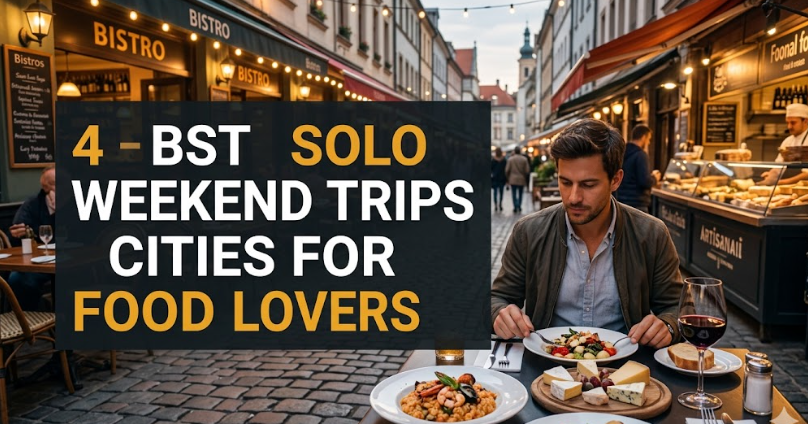
Best Solo Weekend Trips Cities for Food Lovers
There’s something wondrous about eating alone in a city you’ve never visited.
No compromises. No “let’s just go wherever.” Just you, your appetite, and a completely new food scene to explore.
Food is one of the best ways to discover a city when travelling solo on a weekend trip. You eat at your own pace. You find yourself in some random bakery at 8 AM. You sit at the counter by the chef and actually talk to the person preparing your meal.
But not all cities deliver the same bang for a solo food traveler’s buck.
Some cities have a deeper culinary culture — an array of flavors, a richer food history, and a more welcoming vibe for solo diners. Others may look great on Instagram but leave you with tourist-trap pasta and nothing much to tell.
This guide gets to the heart of things. Whether you prefer street tacos or gourmet bistros, spice-heavy bowls or farm-to-table brunches, the four cities outlined below are some of the best places in the world to eat alone for a weekend.
Let’s dig in.
Why Solo Food Trips Are Different
Before jumping into the cities, it’s worth noting that eating alone changes everything when it comes to food.
Traveling solo makes you more aware. You smell it from a side-street kitchen. A vendor’s eye catches you, and he wants to tell you the story of his grandmother’s recipe. You linger outside a market stall for nothing but delicious noodles that smell incredible.
You also have full flexibility. Places with lone bar seats are easier to get. You can hit up four food spots in one afternoon, and no one has to get talked into it. You get up early for the fish market or stay up late for the night food stalls — all on your own schedule.
Solo travel also makes you bolder. You’ll order something you’ve never tried before because nobody is there to judge your taste buds. That courage often results in your best meals.
So here are the four cities that best reward that sort of curiosity.
1. Mexico City, Mexico — Street Food Elevated to an Art Form
Mexico City isn’t just about good eating. It has layers of food: ancient, colonial, modern, and everything in between — all piled one on top of the other in a city that never stops eating.
It is one of the cheapest and most exhilarating solo food destinations on Earth.
The Street Food Scene Is Like No Other
Food follows you once you leave your accommodation. Taco stands glow before dawn. By midday, tlayuda vendors have set up on street corners. Elote — corn on the cob slathered with mayo, cheese, and chili — appears at virtually every market and park.
The taco al pastor — paper-thin slices of spiced pork, shaved off a revolving spit and placed on a small corn tortilla — is something you should eat at least twice a day here. The best are not in fancy restaurants but at the tiny stalls around Colonia Roma and La Condesa.
Mercado de la Merced is one of the largest traditional markets in Mexico and a must-visit. Inside, you’ll discover fresh chiles, dried herbs, mole pastes, and dozens of small food stalls. It can be a lot to take in at first, but that’s the charm.
For a more refined take, Mercado Roma is a food hall built for contemporary tastes — artisan cheeses, craft cocktails, fresh sushi, and traditional Mexican snacks, all under one roof.
How to Sit Alone and Still Feel at Home
There’s nothing unusual about eating alone in Mexico City. Many of the finest establishments have counter seating or open communal tables, and it doesn’t take much to get a conversation going.
Pujol and Quintonil are two of the world’s greatest restaurants, both in Mexico City. With plenty of notice, book yourself a seat at the bar or chef’s counter for what will be a once-in-a-lifetime tasting menu experience. They are not cheap by local standards, but they’re world-class meals for a fraction of what you would pay in New York or London.
For something more low-key, El Vilsito is a mechanic shop by day that serves legendary tacos by night. The line snakes around the building, but solo travelers get seated faster than groups.
What to Drink and When
Mezcal bars in Roma Norte are a great option for solo evenings. Most have bar counters where bartenders enjoy chatting and suggesting pours. Request a flight and let them guide you.
Fresh-squeezed juice stalls abound for your morning pick-me-up. Agua fresca — refreshing drinks made from hibiscus, tamarind, or guava — are nearly free.
| Category | Details |
|---|---|
| Best time to visit | October – March |
| Average meal cost | $3–$25 USD depending on type |
| Solo-friendliness | Very high |
| Top food neighborhoods | Roma Norte, La Condesa, Coyoacán |
| Must-try dish | Taco al pastor + mole negro |
2. Tokyo, Japan — Precision, Ritual, and Late-Night Ramen
It’s no exaggeration to say that Tokyo is one of the best food cities in the world. It has more Michelin-starred restaurants than any other city on Earth. But it’s not the fancier venues that make it a perfect destination for solo eaters — it’s the everyday food culture.
In Tokyo, dining by yourself isn’t merely tolerated. It’s designed for.
Solo Dining Was Basically Invented Here
Ramen shops, sushi counters, yakiniku (grilled meat) restaurants, katsu curry spots — many of Tokyo’s most beloved meals are built around solitary counter seats.
You sit down. You order from a button or a kiosk. Your food appears. You eat in focused, almost meditative peace. It is one of the most satisfying ways to enjoy a meal.
Ichiran Ramen, a famous Japanese chain, takes that to an extreme. You sit in a small individual wooden booth, separated from other diners by a divider, and eat your tonkotsu ramen in complete solitude. It feels strange at first, but after five minutes it seems completely normal.
Markets, Alleys, and Hidden Gems
Tsukiji Outer Market is an early-morning destination for Tokyo’s food obsessives. The inner fish market has moved to Toyosu, but the outer market still hums with fresh sashimi breakfast sets, tamagoyaki (sweet egg omelets), and giant scallops grilled on the spot.
Depachika — the food halls in the basements of Tokyo’s department stores — are some of the most jaw-dropping food experiences anywhere. The Isetan in Shinjuku and the Takashimaya in Shibuya have multiple floors of artisan sweets, bento boxes, fresh sushi, wagyu beef, and imported cheeses. You will buy things.
Yanaka Ginza is an old shopping street that feels like Tokyo 50 years ago. Grilled skewers, croquettes, and matcha sweets are sold by small family-run shops. The pace is slow. The prices are low. It’s perfect for wandering alone.
The Ramen Trail
No Tokyo food trip is complete without a personal ramen tour. There are so many regional styles in the city — tonkotsu (rich pork broth), shoyu (soy-based), shio (light and salty), miso — that you could have ramen at every meal without ever tiring of it.
Fuunji, in Shinjuku, serves one of the most acclaimed tsukemen (dipping noodles) in the city. They open and the line begins. Worth it every time.
| Category | Details |
|---|---|
| Best time to visit | March–May or October–November |
| Average meal cost | $8–$60 USD depending on type |
| Solo-friendliness | Exceptionally high |
| Top food spots | Tsukiji, Yanaka, Shinjuku, Shibuya |
| Must-try dish | Tsukemen ramen + omakase sushi |
3. New Orleans, United States — Deep Flavors, Live Music, and Late-Night Snacking
New Orleans does not do anything quietly. The food is loud, rich, and deeply soulful. It is a city of French, African, Spanish, Native American, and Creole culinary traditions — and all these influences collide on the plate in ways that taste like nothing else in the world.
As a solo food traveler, New Orleans is intoxicating. The city is walkable and friendly, packed with neighborhood joints where strangers quickly become tablemates.
The Classics You Can’t Skip
The beignets at Café Du Monde are always the first stop. These hot, doughy, powdered-sugar-coated fried pastries are served around the clock, seven days a week, alongside the Mississippi River. Get three to go and eat them en route.
Gumbo is the soul of New Orleans cooking. It’s a rich, deeply flavored stew stuffed with meat or seafood — or both — simmered for hours in a dark roux base with an assortment of vegetables. Every restaurant has its own formula. One of the best versions in the city is at Dooky Chase’s Restaurant — a legendary institution with roots dating back to 1941.
The city’s signature sandwich is a po’boy: crispy French bread stuffed with fried shrimp, oysters, roast beef, or catfish, dressed with lettuce, tomato, pickles, and mayo. Domilise’s and Parkway Bakery are local favorites.
Crawfish étouffée, red beans and rice on Mondays (a true New Orleans tradition), charbroiled oysters at Drago’s — it never stops.
Where Solo Travelers Belong
New Orleans has a bar-and-restaurant culture made for dining alone. The bar stool is a cultural institution in this city. Take a seat at the bar of Coquette or Commander’s Palace, and within minutes you’ll be chatting with locals and staff.
The French Quarter is great for exploration, but don’t limit yourself to it. Some of the best newer restaurants in the city are in the Bywater neighborhood — thoughtful, locally sourced cooking with serious technique. Magazine Street has cafés, casual restaurants, and specialty food stores. Coffee in hand, a meander down Magazine is one of the best free activities in New Orleans.
Food and Music Are Inseparable Here
New Orleans is one of the only places where live jazz drifts by as you eat, and it feels completely normal. Live bands start up around 6 PM on Frenchmen Street, just outside the French Quarter. When you hear the beat, grab a plate of jambalaya or a sandwich from the food vendors outside and listen to live brass bands for free.
| Category | Details |
|---|---|
| Best time to visit | February–May |
| Average meal cost | $10–$45 USD |
| Solo-friendliness | Very high — one of the world’s most hospitable cities |
| Top food neighborhoods | French Quarter, Bywater, Uptown |
| Must-try dish | Gumbo + charbroiled oysters + beignets |
4. Istanbul, Turkey — Ancient Recipes, Spice Markets, and Breakfast for Hours
For solo travelers, Istanbul is one of the most underrated food cities in the world. Turkey straddles the line between Europe and Asia, and its food captures that crossroads perfectly — bold spices, slow-cooked meats, fresh fish from the Bosphorus, and an exceptional bread-and-pastry culture.
It’s also one of the most affordable great food cities you’ll find anywhere.
Turkish Breakfast Will Spoil All Other Breakfasts
The Turkish breakfast — known as kahvaltı — is a cultural experience, not a quick meal. It’s a spread.
Small plates of white cheese, salty olives, butter, honey, clotted cream, tomatoes, cucumbers, hard-boiled eggs, and eggs fried in butter; a basket of fresh bread; and several small jams or dips. Çay — strong black tea served in tulip-shaped glasses — arrives in an endless stream.
The best place to experience this is Van Kahvaltı Evi in the Cihangir neighborhood. Arrive before 10 AM on weekends or be prepared to wait.
Once you’ve had a proper Turkish breakfast, continental breakfasts will be a permanent disappointment for the rest of your life.
Bazaars, Kebabs, and Plenty of Freshly Baked Everything
The Grand Bazaar is one of the oldest and largest covered marketplaces in the world — spices, dried fruits, Turkish delight, baklava, and saffron, the kind of things that make excellent edible souvenirs. The smaller Egyptian Spice Bazaar (Mısır Çarşısı) is more focused on food. Both are worth visiting.
For street food, simit — sesame-encrusted round bread that resembles a soft pretzel — is sold by vendors all over the city from early morning. It’s one of the great grab-and-go breakfasts. A simit and a glass of fresh pomegranate juice will cost you less than a dollar.
Kebabs in Istanbul are serious — not the fast-food version you might be used to, but slow-roasted lamb, freshly ground köfte, and döner sliced from an enormous rotating spit and tucked into warm flatbread. For a sit-down Turkish lunch, Karaköy Lokantası is a reliable favorite.
Baklava at Karaköy Güllüoğlu is one of those eating experiences you have once and think about for months — thin, buttery layers of phyllo, pistachios, and syrup.
| Category | Details |
|---|---|
| Best time to visit | April–June or September–November |
| Average meal cost | $4–$25 USD |
| Solo-friendliness | High — welcoming culture |
| Top food neighborhoods | Karaköy, Cihangir, Kadıköy |
| Must-try dish | Turkish breakfast + baklava + döner kebab |
Side-by-Side City Comparison
| City | Budget | Solo-Friendliness | Best For |
|---|---|---|---|
| Mexico City | $ | Very High | Street food, markets, taco culture |
| Tokyo | $$–$$$ | Exceptionally High | Ramen, sushi, food halls |
| New Orleans | $$ | Very High | Soul food, bar culture, live music |
| Istanbul | $ | High | Breakfast spreads, kebabs, bazaars |
Tips for Traveling Solo as a Foodie
Book one special meal ahead of time. Every city on this list has at least one restaurant with a wait weeks out. Research top-rated spots beforehand and book a seat at the bar or chef’s counter at least two weeks ahead if possible.
Have breakfast at local places, not your hotel. Breakfast is where the most authentic and affordable food often lives. Ask a local where to go. That advice beats any review site.
Explore neighborhoods you weren’t headed to. Some of the most exceptional meals on solo food trips happen by chance. Leave room in your itinerary to wander. Follow a good smell off the beaten path.
Sit at the bar whenever possible. The bar is the solo traveler’s greatest ally. You’ll get better service, faster seating, and more interesting conversation than at a regular table.
Keep a food diary. Note what you ate, where you ate it, and why it stood out. You’ll want those notes later.
Learn three phrases in the local language. “What do you recommend?” “Is this spicy?” “Thank you, this is delicious.” These three phrases unlock doors in every food-obsessed culture.
Frequently Asked Questions
Q: Is it awkward to eat in restaurants alone? Not at all — and the more you do it, the easier it gets. Read a book, sit at the bar, or people-watch. In many food cultures, especially Tokyo and Istanbul, solo diners are completely normal and even appreciated by chefs who enjoy cooking for someone paying full attention.
Q: Which of these four cities is the least expensive to visit? Mexico City and Istanbul are the standouts for budget travelers. In both, you can eat extraordinarily well — including at genuinely excellent restaurants — for well under $20 a day if you eat where the locals do.
Q: How long should a solo food weekend trip be? Each of these cities deserves a long weekend of 3–4 days. That gives you time to explore different neighborhoods, revisit a favorite spot, and not feel rushed. Five days is even better.
Q: What if I can’t read the menu? Not a problem if you’re up for a little adventure. Street food vendors and market stall operators deal with tourists all the time. Pointing and smiling goes a long way, and Google Translate’s camera function is genuinely useful for menus written in another script.
Q: What should I pack for a food trip? Comfortable footwear (you’ll walk more than you expect), a small daypack for market purchases, a portable charger for your phone, and a forgiving waistband.
Q: How do I find restaurants that aren’t touristy? Ask a local — they’ll always know the best spots. Turn to local food blogs rather than international travel sites. Look for restaurants where the menu isn’t translated into five languages. Walk two or three blocks off the main tourist streets.
The Bottom Line — Your Next Solo Food Adventure Begins Here
The ideal solo food weekend isn’t about checking famous dishes off a list. It’s about slowing down, paying attention, and allowing a city to nourish you on its own terms.
Mexico City will overwhelm your senses in the best way. Tokyo will teach you that a bowl of noodles can be a meditative experience. New Orleans proves that food and joy are the same thing. And Istanbul will show you that breakfast can last two hours and still be the highlight of your week.
All four of these cities reward the solo traveler who arrives curious and with an open appetite.
Pick one. Book a flight. Sit at the bar. Order something you can’t pronounce.
That’s where the good meals live.