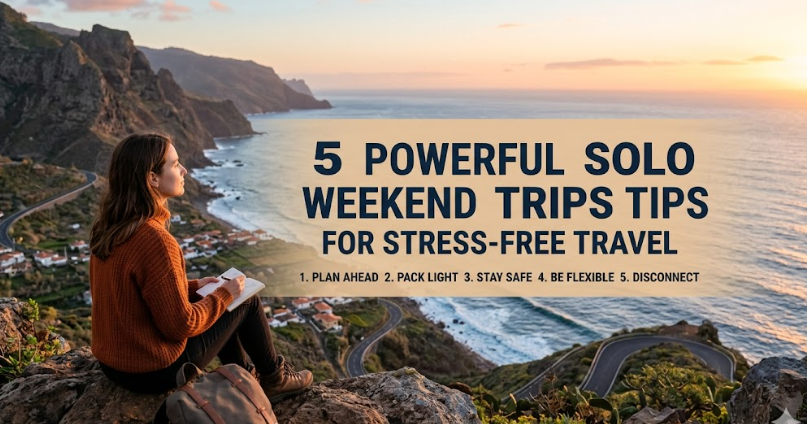
Meta Description: Not every solo weekend trip has to be too overwhelming. Learn five travel tips for solo travel planning: Pack light, stay safe and maintain confidence on the road.
Sleep Like a Baby on Your Solo Weekend Trips — Here Are 5 Tips!
There’s something magical about throwing a bag together, hitting the open road and having no one to answer to.
One of the best ways to recharge, explore new places, and reconnect with yourself is by going on solo weekend trips. No compromises. No group decisions. Just you and the open road — or sky, or rail.
But here’s the reality: a lot of people want to travel solo and never do. Fear of the unknown, safety concerns, and not knowing where to start stop them.
This guide is here to remedy that.
So, whether this is your first solo trip or you’re just seeking to smoothen out the process of traveling alone, here are 5 powerful tips that will ensure your solo weekend trips are planned — and enjoyed — every time without stress.
The Beauty of Solo Weekend Trips
Before getting into the advice, let’s get one thing clear: traveling solo is not lonely. It’s liberating.
When you travel solo, you set the pace. You eat where you want. You spend another hour at a museum — or you skip it completely. No negotiating, no waiting and no guilt.
Solo weekend getaways are surprisingly affordable, too. You’re deciding — budget, accommodation, transport and itinerary. That control is powerful.
And the perks extend beyond convenience. Research indicates that traveling alone enhances confidence, trains decision-making and allows people to feel more at ease in unfamiliar conditions. It is self-development that pretends to be a vacation.
Let’s dive into the tips that bring it all together now.
Tip #1: Choose Your First Solo Destination Wisely
Your destination defines the mood for the entire experience. Choose wisely.
Start Somewhere That Feels Approachable
If you’ve never taken a solo weekend trip before, don’t start with an isolated cabin in the woods. Choose somewhere more straightforward to get around — a mid-size city, a fan-favorite beach town or an established tourist hub.
Why? Because tourist infrastructure is already in place near popular spots. Good signage. English-speaking locals. Reliable transport links. Safe, walkable neighborhoods. They all make the beginning of your trip easier.
Great starter places for solo travel include:
- Places with good public transportation (so you don’t need a car)
- Destinations with a good solo travel community or hostels
- Areas 2–4 hours away (less travel, less logistical concern)
Match the Destination to Your Personality
Not everyone wants the same type of solo weekend getaway. Some are drawn to the hum of a city break. Others look for hiking trails, ocean views or quaint small towns.
Consider this before you book:
“Do I want to feel stimulated, or do I want to relax?”
That one question quickly narrows the field.
If you feel burnt out after a stressful week, an isolated countryside retreat might be better for your health than a city full of crowds. If you’re craving stimulation, an art district or food scene may be just what the doctor orders.
The best solo trips take place when your destination meets where you are emotionally.
Tip #2: Pack Light — No, Really, Pack Light
This is the tip that makes solo weekend trips go from stressful to smooth.
Why Overpacking Kills the Vibe
When you’re traveling solo, there’s no one around to help you lug a heavy bag. No partner to keep an eye on your luggage while you use the bathroom. No teammate to heave your suitcase up three flights of stairs at the hostel.
Everything you bring, you carry.
Heavy bags slow you down. They make public transport uncomfortable. They complicate impulse decisions — when you’re hauling a giant suitcase, heading to a café is not the kind of spontaneous fun it used to be; taking an unexpected detour becomes logistically more challenging.
Light packing = more freedom. And freedom is the very essence of a solo weekend trip.
The Weekend Packing Formula
For a simple 2–3 night solo trip, here’s the easiest formula that works:
One bag. That’s it.
A small carry-on or a 20–30 liter backpack is sufficient. Here’s how to best fill it:
- Clothing: Two mix-and-match outfits and one layer for climate transitions. Wear your heaviest clothes on the day of travel.
- Toiletries: Travel-size only. Solid shampoo bars save weight and space. Most accommodations provide basics.
- Electronics: Phone, charger, earbuds. If you’re truly trying to unplug, skip the laptop.
- Documents: ID, card, emergency cash. A small travel document pouch worn underneath your clothes works best.
- A comfort item: A book, a journal or a portable speaker. Just one.
The “Do I Need This?” Test
Before everything goes in the bag, ask: “Would I miss this if I left it behind?”
If your answer is “maybe” or “probably not,” leave it out. If you really need something, you can almost always purchase it at your destination. This unnecessary burden is not worth the stress.
Tip #3: Plan the Bones, Leave the Rest Open
There’s a thin line between planning enough to feel safe and over-planning so much that the trip feels like a schedule. Solo weekend trips are at their best when you hit that sweet spot.
What to Book in Advance
Some things must be confirmed before you leave. Just showing up without these in place creates undue anxiety.
- Accommodation: Know where you’re sleeping. Even a flexible booking is better than frantically hunting for a room when you arrive.
- Outbound transport: Have your journey there sorted. Trains, buses and flights can book up quickly on weekends.
- One highlight activity: If there’s something you really want to do — a famous hike, a restaurant, a museum — book it in advance. It gives your trip a clear highlight to look forward to.
What to Leave Open
Everything else? Keep it flexible.
The magic of solo travel often comes in unplanned moments. You wander into a neighborhood market, strike up a conversation with a local, or stumble upon an out-of-the-way street food stall that delivers your best meal of the trip.
Rigid itineraries close these moments out.
A good rule of thumb: Plan your mornings, improvise the afternoons. Know where you’re heading each day but let the rest unfold on its own.
This method provides structure without rigidity. You’re always moving, but never boxed in by a plan.
Use Offline Maps
Download an offline map of your destination before you head out. Apps like Google Maps let you do this for free.
Why offline? Because Wi-Fi and cell service aren’t always dependable — especially in rural areas or older neighborhoods. A map you can access without data saves both stress and battery life.
Tip #4: Travel Alone, But Not in a State of Paranoia
Safety is always a concern when someone mentions solo weekend trips. It’s a genuine concern — but it’s also one that gets inflated to the extreme.
The point isn’t to remove all risk. That’s impossible. It is about traveling smart, staying alert and avoiding unnecessary situations.
Share Your Plans With Someone Back Home
Before you leave, inform someone of your location. Your hotel address, your transit details, and a rough daily itinerary. Touch base with them once per day — just a quick text will do.
This isn’t about being paranoid. It’s about ensuring that if something does go wrong, someone knows where you are. That peace of mind can also help you relax and enjoy the trip.
Keep Both Digital and Physical Backups of Your Documents
Photograph your passport, ID and booking confirmations. Email them to yourself or store them on a cloud service. Keep a small amount of emergency cash in a separate location, away from your wallet.
If your phone or wallet is lost or stolen, these backups can mean the difference between a minor inconvenience and a travel disaster.
Trust Your Gut
This one may sound obvious, but it’s worth stating plainly: if a situation or person makes you uncomfortable, remove yourself from it. You don’t have to explain yourself to anyone.
Solo travelers — especially those new to it — can sometimes override their instincts to avoid seeming rude. Don’t. Your intuition is often correct, and your safety is more important than being polite.
Situational Awareness, Not Permanent Terror
Being safe is not the same as being terrified. Most solo weekend trips go just fine. Stay present and aware — don’t have your nose buried in a phone, don’t walk around with both earbuds in unfamiliar settings, and don’t make it obvious to strangers that you’re alone.
Act confident. Walk with purpose. Familiarize yourself with your surroundings.
Tip #5: Embrace Solitude — and Recognize When to Seek Company
The greatest mental transition for solo weekend trips is becoming comfortable with yourself. This sounds easy. For a lot of people, it’s genuinely hard at first.
The Uncomfortable First Hours
The first hour of a solo trip can feel strange. You might feel conspicuous eating alone, wandering without someone to explore sights with, or sitting quietly in a café with no one to chat to.
This is completely normal.
That awkwardness fades — very often by the second day. What fills that void is something even better: the quiet confidence that you are capable of handling things yourself.
Eating Alone Isn’t What You Think It Is
Those new to solo travel often dread dining out alone. The reality? Far fewer people care than you think.
Most solo travelers come to enjoy it. You notice more. You slow down. You actually taste the food rather than rushing through conversation. A good book or journal makes a solo meal feel almost meditative.
If dining alone feels exposed, ask for a seat at the bar or counter. Bartenders are usually great conversationalists and can offer local tips that no guidebook covers.
When and How to Connect With Other Travelers
Going solo doesn’t mean going anti-social. In fact, it’s often easier to meet people when you’re traveling solo — because you’re naturally more approachable.
Ways to connect naturally:
- Stay in a hostel (even the common area if you’ve booked a private room). The social energy is built in.
- Join a free walking tour. These attract solo travelers and are a wonderful way to see a city and meet people simultaneously.
- Take a class or workshop. Activity-based environments — cooking classes, pottery, surf lessons — create easy conversation.
- Share tables in cafés or food markets. The proximity of strangers invites casual exchange.
Finding the balance between solitude and connection is a personal matter. Some people want 90 percent quiet time and 10 percent social. Others are the reverse. Traveling solo lets you negotiate this on the fly, based on how you feel from day to day.
Before You Go: A Solo Weekend Trip Planning Timeline
A bit of structure in the week before your trip saves you last-minute stress.
| Timeframe | What to Do |
|---|---|
| 1–2 weeks before | Book accommodation and outbound transport |
| 3–5 days before | Download offline maps, confirm bookings, pack light |
| 1 day before | Share your itinerary with someone at home, charge all devices |
| Day of departure | Carry document copies, wear heaviest items, arrive early |
What to Do When Things Go Wrong
No trip — solo or otherwise — goes entirely according to plan. Something will go sideways. A train will be delayed. A restaurant will be full. The weather will turn.
The difference between a stressful experience and a funny story you share later is usually mindset.
Reframe the Disruption
When something goes awry on a solo weekend trip, it can be tempting to spiral — especially without someone along to help talk you through it. Catch that spiral early.
Ask yourself: “Is this really a problem, or is it an inconvenience?”
A missed bus is a nuisance. A closed attraction is a hassle. These things aren’t emergencies. They’re redirects. Sometimes, the alternative ends up being better than the original plan.
Give Yourself Recovery Time
Don’t schedule yourself so tightly that you have no time to breathe. Build buffer space into your days — time where nothing is planned and you can rest, roam or just sit somewhere pleasant.
Fatigue kills enjoyment. Solo travel requires more mental energy than group travel, simply because you’re making all the decisions. Allow yourself to do nothing for a bit. That isn’t wasted time — that’s the trip doing exactly what it was supposed to do.
FAQs About Solo Weekend Trips
Is it strange to go away for a weekend by yourself? Not at all. Solo weekend getaways are becoming more common — and more accepted. Lots of people travel solo to reconnect, wander freely or simply enjoy their own company. You’re far from alone in this.
What should I do if I feel lonely on a solo trip? Loneliness often sneaks in, particularly during the early hours of your first solo trip. Combat it by spending time in social spaces — cafés, hostel common areas, walking tours. Journal your thoughts. Call a friend for a brief catch-up. Usually, the feeling subsides as you settle into the rhythm of the trip.
What are the safest types of accommodation for solo travelers? Highly rated hostels work well for those who prefer a social atmosphere. For privacy with safety, look for boutique hotels or guesthouses in central, well-reviewed neighborhoods. Read recent reviews from solo travelers — they’ll flag things that matter most.
How much money do I need for a solo weekend trip? It largely depends on your destination and style. A budget weekend (2 nights, budget accommodation, public transport and some self-catered meals) can be as low as $100–$200 in certain destinations. Mid-range trips typically run $300–$600. The primary benefit of solo travel is that every line item is controlled by you.
What if I don’t feel safe? Move immediately into a public space with people around. Trust your gut — if something feels off, follow that instinct. Call local emergency services if needed, or return to your accommodation. Before leaving home, share your live location with someone using your phone’s built-in sharing features.
Can I take a solo weekend trip without a car? Absolutely. Many solo weekend trips are easier without one. Cities and tourist destinations have reliable public transit, and walking or cycling often reveals more than driving ever would. Trains and buses can also be great places to meet fellow travelers.
How do I stop overthinking and just go? Book something small and non-refundable. Seriously — that simple step creates enough commitment to silence the overthinking. You don’t have to have it all figured out. You just need to leave.
The Takeaway: Solo Weekend Getaway — Pack Your Bags
Every tip in this guide leads directly to one thing: just go.
The destination doesn’t have to be idyllic. The packing doesn’t have to be perfect. The planning doesn’t need to be airtight.
What matters is taking that first step — because solo weekend trips often outperform expectations once you’re in them. The nervousness fades. The freedom kicks in. And you come home feeling more like yourself than when you left.
Start small if you need to. One night, somewhere nearby, with a bag you can carry. See how it feels.
Then do it again — a little farther, a little longer, a little more daring.
That’s how solo travel grows. And once it does, it’s extremely difficult to stop.