Solo Weekend Trip Experiences That Rebuild Confidence
There’s something special about traveling alone.
No one to agree with. Nobody there to question your decisions. You, a bag, and wherever you’re going.
Solo weekend trips may initially sound intimidating — but they’re actually one of the best ways to find out what you’re really capable of. You make your own choices. You solve your own problems. And when you go home Sunday night, there’s a change in you.
More grounded. More capable. More you.
Here are six solo weekend trip experiences that truly boost confidence. You learn something different about yourself from each one — and every single one is completely achievable, even if you’ve never traveled alone.
Why Solo Travel Builds Confidence Faster Than Anything Else
The advice most often given is: “Get out of your comfort zone.” That’s true, but it’s vague.
Solo travel makes that concrete.
Traveling alone means you own every moment of the trip. You decide where to eat. You navigate new streets. You talk to strangers. You deal with delays, wrong turns, and unanticipated moments.
Each of those little challenges — solved by you — adds a brick to the wall of your self-belief.
According to a 2023 study from the Journal of Travel Research, solo travelers reported feeling more autonomous, emotionally resilient, and personally developed than group travelers. The reason? There was no one else they could depend on to sort things out.
That’s the magic.
Solo Travel Isn’t Just for Extroverts
Solo travel isn’t only for adventurous, extroverted people. That’s a myth.
Introverts often find solo travel invigorating because it relieves them of social pressure. You go at your own pace. You know when to recharge. You don’t have to explain yourself to anyone.
6 Solo Weekend Trip Experiences That Change You
Each experience below is intentionally designed to cultivate a specific kind of confidence — not just some generalized “feel good” vibes.
1. Wake Up in a New City — Alone
Why This One Comes First
A two- to three-day solo trip for beginners. Choose a city you’ve never slept in. Book one hotel room or an affordable hostel. Go.
It sounds too simple. But here’s what happens.
You check in alone. You figure out where to eat. You go to a restaurant alone and order food. You wander through an unfamiliar neighborhood at night.
The first time each of those moments happens, it’s uncomfortable. By the end of the night, it isn’t.
What It Builds
This experience builds social courage. Sitting alone at a table. Walking into a bar. Asking a local for a recommendation. These are small acts of bravery that rewire your relationship with being alone in public.
Most people are terrified of dining solo before their first trip like this. After it, you won’t be.
Tips to Make It Work
- Pick a walkable city so you can skip the car
- Choose a weekend with good weather — you’ll want to be outdoors
- Don’t plan every hour; leave space for wandering
- Sit at a bar counter rather than a table — it’s easier to start conversations
2. Take a Solo Hiking Trip
Nature Strips Everything Back
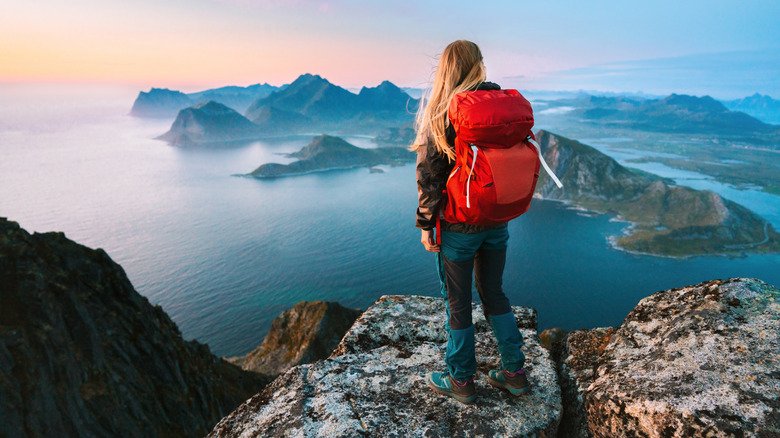
A solo hike — even a one-night trail — is one of the most grounding things a person can do.
No phone signal. No distractions. Just a trail and your own company.
While solo hiking, many people encounter a quiet revelation: they actually enjoy being in their own company. That’s a significant shift for anyone who has spent years filling every free moment with noise.
The Confidence You Gain
Solo hiking teaches problem-solving confidence. Trail unclear? You figure it out. Weather changes? You adapt. Got tired earlier than expected? You manage your pace.
These aren’t dramatic survival moments. They are small, consistent decisions that accumulate into genuine self-trust.
What to Pack and Plan
| Essential Item | Why It Matters |
|---|---|
| Map + compass (not phone only) | Batteries die. Paper doesn’t. |
| First aid kit | Small cuts happen often |
| Extra food and water | Trails take longer than you think |
| Headlamp | Sunset comes faster than expected |
| Emergency contact plan | Tell someone your route |
Start with a day hike before committing to an overnight trail. Build up slowly.
3. Visit a Museum Town or Cultural Destination Solo
Slow Travel Is the Best Kind of Solo Travel
This one surprises people.
Visiting a museum, a historic town, or a city with galleries solo gives you something group travel rarely can: the freedom to linger.
You can spend 45 minutes in front of one painting. You can skip the exhibit everyone else loves. You can leave early or stay until closing. Nobody’s waiting.
This kind of self-guided exploration teaches you to trust your own taste.
The Deeper Benefit
Low confidence often comes down to self-doubt: “Is this interesting? Should I find this interesting? What will they think of me?”
When you’re traveling alone to a museum or cultural site, none of those questions matter. You engage with what you find meaningful. That’s intellectual confidence — a comfort with your own mind.
Good Destination Types for This Experience
- Small towns with a relaxed pace and lower costs
- Cities with strong art or photography museum scenes
- Coastal or riverside towns with independent galleries
- Open-minded university towns with accessible cultural institutions
4. Take a Weekend Road Trip With No Set Itinerary
It’s the Unplanned Trip That Teaches You the Most
Renting a car and driving somewhere with no fixed schedule sounds irresponsible. That’s exactly why it works.
You pick a general direction — a coastline, a mountain range, somewhere you’ve read about. Then you drive.
You stop when you want to stop. You stay wherever has rooms available. You eat at whatever looks good from the highway.
It’s the kind of trip that chips away at perfectionism.
What Unplanned Travel Teaches
The greatest fear about traveling alone is that something will go wrong. The unplanned road trip teaches you that things will go a little wrong — and that you’ll be completely fine.
You’ll miss a turn. A place will be closed. A town will be less interesting than it sounded. And in every one of those moments, you’ll be okay.
That lived experience is worth more than any self-help book.
5. Stay in a Hostel and Talk to People
A Social Reset for the Socially Stuck
This one is especially for anyone who struggles socially.
Spending a night in a hostel — even just one — puts you in the same room as strangers from all over the world. The dynamic is unique. Everyone is passing through. There’s no social pressure. People are expected to be friendly.
It’s one of the safest social environments in the world.
Why Hostel Culture Builds Confidence
In everyday life, social interactions carry weight. These are your colleagues, your neighbors, people you’ll see again. The stakes feel high.
A stranger in a hostel is your conversation partner for a few hours — then they’re gone. You can be anyone. You can ask questions you’d never usually ask. You can talk about things you’d never bring up at home.
It’s a low-stakes social environment — a gym for your confidence.
What Typically Happens in Hostels
| Hostel Moment | What You Learn |
|---|---|
| Sharing a dorm room | Ease around strangers |
| Casual chat in the common room | How naturally conversation can start |
| Sharing a meal with someone you just met | Being included without an invitation |
| Getting tips from other travelers | Trusting your gut about who to trust |
You don’t have to be a party animal. Most hostels have quiet rooms and solo-friendly common areas. The key is to show up, be present, and let conversations happen.
6. Go on a Solo Retreat — Even If Only for 48 Hours
This One Is Different
All five experiences above are about doing. This one is about being.
A solo retreat means renting a quiet place — a cabin, a farmstay, a small-town B&B — and keeping your schedule clear. You’re not hiking to a summit or browsing museums. You’re just… there.
That sounds boring. For many people, it’s actually frightening.
And that’s precisely what makes it powerful.
The Fear of Your Own Company
Many people refuse to be alone with their thoughts. They fill silence with podcasts, scrolling, TV — anything. A solo retreat strips all of that away.
What’s left is you.
And most people find they are much better company than they expected.
A 48-hour retreat builds inner confidence — the kind that doesn’t rely on external validation, distraction, or other people’s energy.
How to Structure a Solo Retreat Weekend
No spa or wellness program required. Here’s a simple framework:
- Friday evening: Arrive. Unpack slowly. Don’t rush anywhere.
- Saturday morning: Wake up without an alarm. Eat breakfast alone. Sit outside if you can.
- Saturday afternoon: Walk, write, read, draw — whatever feels natural. No productivity goals.
- Saturday evening: Cook something easy or have dinner nearby. Sit with the quiet.
- Sunday: Do whatever feels right. Leave when you’re ready.
No agenda. No goals. Just presence.
How Each Experience Builds a Different Type of Confidence
Confidence isn’t one-size-fits-all. Here’s what each experience actually trains:
| Experience | Type of Confidence Built |
|---|---|
| New city alone | Social courage |
| Solo hike | Problem-solving and self-trust |
| Museum/cultural trip | Intellectual confidence |
| Unplanned road trip | Adaptability and resilience |
| Hostel stay | Social ease and communication |
| Solo retreat | Inner stillness and self-acceptance |
Before You Go: Solo Travel Safety Considerations
Confidence doesn’t mean carelessness. Here’s how to travel solo smartly:
- Tell someone your plan. Always inform a trusted friend or family member where you’re going and when you expect to return.
- Keep digital and physical backups. Screenshot your hotel address. Carry a small amount of cash even if you mainly use cards.
- Trust your gut. If something feels off, it probably is. Move on.
- Stay in well-reviewed accommodations, especially on your first few solo trips. Check recent reviews across multiple sites.
- Keep your phone charged. A portable power bank is one of the most useful things you can carry.
- Don’t overpack. A heavy bag limits your mobility. For a two-day trip, aim for everything in a carry-on.
The Confidence Curve: What to Expect Before, During, and After
Most first-time solo travelers experience a similar emotional arc. Knowing it in advance makes the journey smoother.
- Before the trip: Anticipation mixed with uncertainty. “Can I really do this?” Yes, you can.
- The first few hours: A little awkward. Everything feels slightly louder, slightly more intense. This is normal. It passes.
- By the end of day one: Something shifts. You’ve already made a dozen small decisions. All of them worked out. You relax.
- End of the trip: You feel capable in a way that’s hard to describe. Not cocky. Just solid.
- Back home: The world feels slightly more manageable — because you know what you can handle.
This arc repeats every time you take a solo trip. But each time, the nervous part gets shorter and the solid part gets longer.
Frequently Asked Questions
Q: Is solo travel safe for a first-timer? Yes, with basic precautions. Choose well-lit, well-reviewed destinations. Keep someone at home informed of your whereabouts. Stay aware of your surroundings. Millions of people travel solo every weekend without incident.
Q: Am I too introverted to enjoy solo travel? Not at all. For many introverts, solo travel is more comfortable than group travel because there’s no social pressure. You move at your own pace and participate as much or as little as you like.
Q: Where’s the best solo weekend getaway for a total beginner? Start with one night in a nearby city. It’s low risk, low cost, and gives you a real sense of what solo travel feels like without a major commitment.
Q: How much does a solo weekend trip cost? It varies widely. A weekend in a budget hostel with simple meals can cost less than $100. A hotel in a larger city with restaurant meals might run $200–$400. The cost is largely what you make it.
Q: What if I get lonely? Loneliness on solo trips is real, especially the first time. It usually passes quickly. A café, a walk through a busy market, or a conversation at a hostel is often enough to break it. Many solo travelers say loneliness teaches them something valuable about their own emotional needs.
Q: Can solo travel help with social anxiety? It can. Hostel environments and travel settings offer low-stakes social practice that can be genuinely therapeutic. While not a substitute for professional support, many people with social anxiety report that solo travel helps them build real-world social skills.
Q: How do I plan a solo weekend trip without getting overwhelmed? Keep it simple. Pick a destination. Book one night. Pack light. That’s genuinely all you need to get started.
Take the Trip
Here’s the truth about confidence.
It doesn’t develop by reading about it. You build it by doing something that feels a little scary — and discovering you were fine.
Solo weekend trips are one of the most effective ways to do exactly that. They place you in unfamiliar environments, outside your support system, with only your own judgment to guide you.
Each of the six experiences in this article builds a distinct form of confidence. You don’t have to do all six at once. Choose the one that sounds most appealing — or least comfortable — and start there.
Book the room. Pack the bag. Get on the road.
The version of you that returns home on Sunday will be slightly different from the one who left on Friday.
And that gap, over time, becomes everything.
Ready to plan your first solo weekend trip? Start small. One night. One new city. That’s all it takes.